fredag 1 juli 2011

Life of Puffins / Lunde

The Atlantic Puffin (Fratercula arctica) is a very popular species, both among nature photographers, bird-watchers, and other visitors to the areas where puffins may be seen. Right now, the breeding season is at its height along the Norwegian coast and around the breeding colonies, puffins can be seen flying back and forth with food to feed their chicks.

They nest in burrows on grassy cliffs and only spend time on land during the breeding season. The large and colourful beak is equipped with hooks, allowing the puffins to catch several fish in the beak before returning to land. On the pictures below it looks like most birds here in Vesterålen, Norway bring sand-eels and small herring back to feed their young.


Atlantic Puffin (Fratercula arctica)


Puffins on their nesting grounds


Puffin-burrows on a grassy cliff


Puffins out at sea


Most of the puffins in Vesterålen seem to return from the sea with sand-eels or herring

tisdag 28 juni 2011

Atlantic white-sided dolphins - Kvitskjeving

Perhaps the most colourful dolphin species of the world can be found along the Norwegian coast. With it`s strong colouration in white, yellow and black, Atlantic White-sided Dolphins (Lagenorhynchus acutus) look like they belong in tropical waters, but are in fact endemic to the cool and temperate waters of the North Atlantic.

Yesterday, I encountered a relatively large group of these beautiful dolphins playing and jumping in Andfjorden in Nordland. Not only is this dolpin species one of the most colourful, but also one of the more acrobatic. Reaching almost 3 m in length, the leaps and jumps are truely spectacular.

Together with the White-beaked Dolphin (kvitnos), the Atlantic White-sided Dolphin (kvitskjeving) are commonly referred to as "springer" in Norway, but a closer look will reveal relatively large differences between the two species.


Atlantic White-sided Dolphins


Breaching Atlantic white-sided Dolphin


Atlantic White-sided Dolphin breaking the water surface¨


Not often is it possible to see the underside of a marine mammal,
but with playful dolphins like this one most things are possible

torsdag 16 juni 2011

Basking Shark - Brugde

Today at work, I spotted an enormous basking shark (Cetorhinus maximus) feeding in the waters off Stø in Vesterålen.

The basking shark is the second largest fish in the entire world (only the whale-shark is bigger). The specimen outside Stø measured approximately 9 meters and was thus a fully grown adult shark close to the maximum length of the species. It was slowly swimming around with it`s mouth wide open, filtering the sea water for plankton. In spite of being such a large shark, basking sharks (like the baleen whales), filter-feed on plankton making the basking shark a harmless and "gentle giant" of the oceans.

Norwegian waters is the northernmost outpost for basking sharks, which is usually found in more warm-temperate waters. Once fairly abundant, basking sharks are now a rare sight in Norway due to over-exploitation (mainly for the liver and the fins which were sold for shark-fin soup). Today, the biggest threat for the sharks is ship strikes.

Below are some pictures of this strange and amazing shark, some of will be used for photo-identification in co-operation with The Shark Trust: http://www.baskingsharks.org/content.asp?did=26584 who is working for the protection of basking sharks and other sharks.


Basking shark close to the surface. The upper part of the mouth, the dorsal fin and the
caudal (tail) fin can be seen above the water surface. This individual was between 9-10 m long.


A local fishing boat passing the shark

 
Dorsal fin of the shark

 
Close-up view of the dorsal fin, which will be used to identify the shark in co-operation
with The Shark Trust: http://www.baskingsharks.org/content.asp?did=26584


Basking Shark (Cetorhinus maximus) in the evening light

fredag 3 juni 2011

Midnight Sun Eclipse

At midnight between 1-2 June a rare eclipse of the Sun could be seen above the Arctic circle. In the evening, the weather looked bad, but the skies cleared up miraculously just in time for the start of the eclipse.

At the point of greatest eclipse (58% eclipsed), the Sun looked like a big smile in the sky. Some pictures from Kvaløya outside Troms below:


Beginning of the eclipse


 During the point of greatest eclipse, the Sun was setting behind the mountains and for a while it almost looked like a second moon was eclipsing the sun from below..


Strange-shaped sun at midnight

onsdag 25 maj 2011

Bluethroat - Blåstrupe

The Bluethroat (Luscinia svecica) is perhaps one of the most characteristic birds of the North, with it`s strong colouration and imitative song. Having it`s overwintering grounds in Africa and Asia as far as India, most bluethroats arrive to their breeding grounds in mid-May, and today I was lucky to spend some time with this beautiful bird.


måndag 23 maj 2011

Norwegian Lemmings - Lemenår

The Norwegian Lemming (Lemmus lemmus) is perhaps the most typical Scandinavian mammal. It`s distribution is being restricted to Norway, Sweden, Finland, making it endemic to Scandinavia. It may also be found in the westernmost areas of northern Russia like the Kola peninsula.

The population cycle of lemmings fluctuates dramatically, and if conditions are right, the population may rise to very high levels and in 2011 there has been many reports of lemmings from all over Norway indicating that this is one of the "lemming-years".

I therefore went out looking for this characteristic species in the inland of Troms, and sure enough, as soon as I had left the coast where I live, the roads were full of road-killed lemmings, but also many on the move and they could be seen in all sorts of areas and habitats including tidal zones where they were running like little "slippers" among wading birds like dunlins, red knots and oystercatchers..

It`s a wonderful species to see and with such high numbers of lemmings there is also a good chance that many other species will benefit from all the additional food like e.g. owls, birds of prey and arctic foxes to mention a few.


Norwegian Lemming (Lemmus lemmus)


On the run...


Norwegian lemming (Lemmus lemmus)


Many lemmings don`t survive when they cross the roads


Norwegian lemming (Lemmus lemmus)

onsdag 11 maj 2011

Solar Eclipse at Midnight !

In three weeks time (on 1 June) a very special and exclusive event will take place for those of us who live in the far North - A Solar Eclipse in the middle of the night!

This event can, of course, only be seen in areas located above the Arctic Circle where the sun doesn`t set during night. Here in Tromsø, the midnight sun period is "officially" between 20 May - 22 July, so the eclipse of the sun will happen right in the middle of the midnight sun-period.

In more detail, the solar eclipse will begin 22.43 (local time) on 01 June and at 23.33 the sun will reach the point of greatest eclipse. The end of the eclipse will be at 00.24 (local time) on 02 June. Click the headline above for more details on the NASA Eclipse Web Site.

The Sun will be eclipsed by approximately 60% at the point of greatest eclipe, so the event should look something like this (a picture from an earlier partial solar eclipse from Tromsø):


REMEMBER NEVER EVER too look directly at the Sun as it can cause permanent eye damage. Sun glasses IS NOT ENOUGH. In Norway, proper glasses for watching the eclipse can be ordered here: http://www.astrobutikken.no/storefront.php?c1=1

A place with a clear view of the Northern horizon will be the best place to watch the eclipse as the Sun`s altutide will only be 3 degrees.

Mark your calendar with the details and prepare yourself to witness a very rare pheneomenon - what could be better than sitting under the midnight sun on a summer evening and as a bonus get a solar eclipse? Good luck everyone with the weather and let`s hope for a wonderful evening!

måndag 2 maj 2011

Cutest in Norway?

Today I had a nice meeting with one of our smallest and most cute mammals, the Northern Red-backed Vole (Rødmus/Rödsork), feeding on the first plant buds of the spring.

The Northern Red-backed Vole (Myodes rutilus, former Clethrionomys rutilus) is found in most of Northern Norway down to the county Nordland in the south, where the similar species Bank vole (Myodes glareolus) has it`s northernmost distribution limit. The two are easily separated by the very short and thick tail of Northern Red-backed voles.


lördag 9 april 2011

Long-tailed Duck - Havelle

Now during spring, many new birds are arriving in the North. One of my favourite birds, the long-tailed duck (Clangula hyemalis), being the only member of the genus Clangula, is still to be seen in the fjords, but the ducks will soon leave for their breeding habitats in tundra pools and marches on land.


Long-tailed Duck, male


Long-tailed Duck, male


Long-tailed Duck, female


Long-tailed Duck, female

fredag 8 april 2011

Northern Lights Coronas

April is the last month to see the auroras here around the Arctic circle, but just like last year, this April has proved to be very good with many spectacular evenings. There may still be several nights left with auroras before the dark skies disappear from the north. A small selection of pictures taken directly above the head in zenith:
Purple and green corona


Faint corona

Corona and clouds

onsdag 30 mars 2011

Space Weather - The Sun

Yesterday`s view of the northern lights from Kvaløya made it to the front page of the famous astronomy-site "Space Weather" - click on the headline above for news about the auroras and the sun !

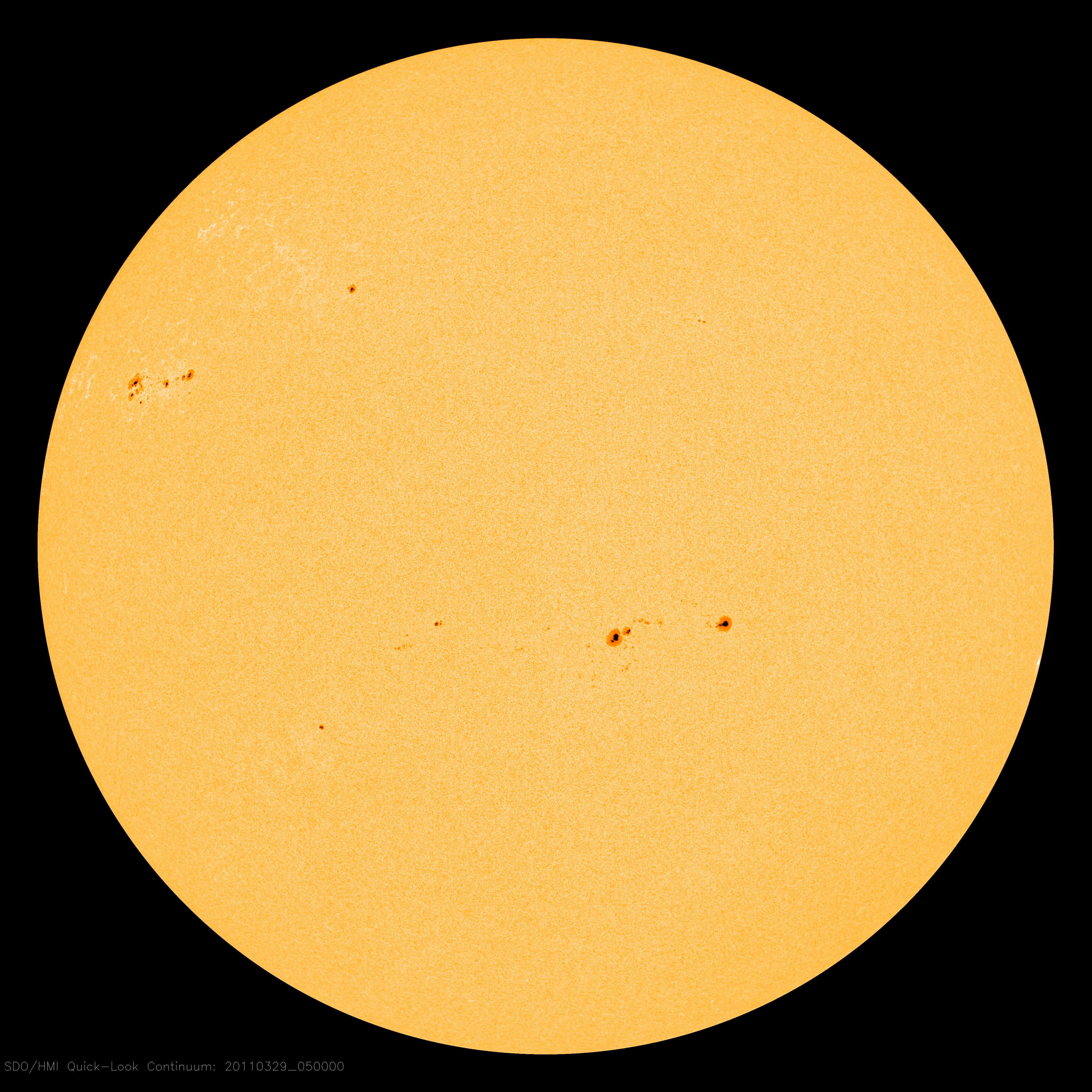
Today I tried to image the beautiful sun-spots that is currently facing "our" side of the Sun with my small pocket camera hand-held in front of a pair of normal binoculars WITH SOLAR PROTECTION - REMEMBER NOT TO LOOK or point any instrument at the sun without proper protection!


Even using such simple equipment several of the sun-spots could be seen (sunspot nr 1176 is very prominent). A slightly better image :-) by the Solar Dynamic Observatory SDO/HMI can be seen here : http://www.spaceweather.com/images2011/29mar11/hmi4096_blank.jpg?PHPSESSID=uvv27flgf3pq73hn5936sk7536


The Sun on 30 March 2011 - click for larger picture.

måndag 28 mars 2011

Green Spring

This season of northern lights is soon about to come to its end, but there is still almost a month left with dark enough skies to be able to see the auroras before the midnight sun starts to take over the night sky. Close to the mountain Store Blåmann on Kvaløya outside Tromsø a beautiful green band stretched from east to west together with the Milky Way


Watching the northern lights and the Milky Way


Corona over the constellations Boötes and Coma Berenices in the early morning hours


The Beehive cluster (M44) in the constellation Cancer over the snowclad mountains

lördag 26 mars 2011

Dolphins in Town !

Lately, several flocks of white-beaked dolphins (Lagenorhynchus albirostris) have been seen around Tromsø in Northern Norway.


Here is a short video sequence of a group of dolphins just outside the airport in Tromsø on 21 March 2011 and a couple of images from March 2011 and from earlier visits of this species in Tromsø and on the coast of Troms.


White beaked dolphins outside Tromsø


White beaked dolphins outside Håkøya close to Tromsø


Group of white beaked dolphins in Tromsø


Acrobatic white beaked dolphin outside Senja, Norway


White beaked dolphins in Tromsø city center

White beaked dolphins outside Senja, Norway

tisdag 22 mars 2011

Brightest Star

The brightest star in the night sky - Sirius - is now putting on a nice show in the early evening hours. At northern latitudes, Sirius is often too low for observation, but now during spring the star is rising fairly early in the evening and due to its brightness it almost looks like a planet .

Most widely known as "the brightest star", Sirius is actually a binary star system consisting of the bright Sirius A and the white dwarf companion (Sirius B), but only a single point can be seen unless you happen to own a very powerful telescope.

Rising in the blue twilight hour Sirius is a beautiful sight.

Sirius over the mountain landscape of Kvaløya close to Tromsø, Norway

lördag 19 mars 2011

Perigee Moon

Tonight`s Full Moon is the biggest in 20 years. To visualise the effect I compared tonight`s full moon with an image taken with the same equipment last autumn - and the size difference is actually BIG!
Size comparison between tonight`s full moon and a full moon from last autumn

fredag 18 mars 2011

Biggest Moon in 20 years

Tomorrow, Saturday 19 March, the Moon will be full (check "The Current Moon Phase" to the right for details).

What is special about the Moon tomorrow is that tomorrow`s Full Moon will be bigger than usual - it will in fact be the biggest full moon in 20 years time and will be 14% larger than "the average Full Moon"!

The distance between the Earth and the Moon is not constant and sometimes the Moon is closer, sometimes it is further away. What is speciel about tomorrow is that the full moon coincides with the distance beeing at it`s minimum, "a mere" 356 557 km away.

Provided that I have clear weather, I will post a comparison between a "normal" full moon and tomorrow`s full moon after the weekend.

Why don`t try yourself? Take a picture of the full moon tomorrow with a tele-lens and compare it with a picture taken with the same lens at another time.


Almost Full Moon

tisdag 15 mars 2011

Evening Planets

How many of the planets in our solar system have you seen?

Now is the best time to catch a glimpse of one of the trickiest planets to see - Mercury.

Simply step out after sunset and look to the west, where there should be two bright "stars" fairly low in the horizon - the two "stars" being the planets Mercury and Jupiter, where Jupiter is the brightest of the two. Mercury is, however, unusually bright right now and should be easy to locate but it will fade rapidly in brightness towards the end of the month.

After sunset on the evening of 15 March, Mercury (being the smallest planet in our solar system) and Jupiter (being the largest) are separeted by only 2 degrees and can be seen right next to eachother which should be an amazing sight.

Having cloudy weather, I have not been able to take a picture of the planet-pair yet, but hopefully I`ll be able to post an image/finder chart by tomorrow evening.

måndag 14 mars 2011

Auroras - Time Lapse

Tonight, auroras were dancing over the moonlit landscape of Kvaløya outside Tromsø in Northern Norway - here is a short part of a video sequence I took during the night, covering about 1,5 hours.


fredag 11 mars 2011

Polar Lights

Strong Auroras could be seen tonight as a coronal mass ejection (CME) hit the magnetic field of the Earth and produced a very colorful and strong display.

The polar lights could be seen until the break of dawn at around 05.30 local time - maybe more will come tonight...


Moon and Auroras


Green and purple


View of the southern horizon - the auroras could be seen far south


Fast moving curtains in purple, red and green


onsdag 16 februari 2011

Auroras and Sunspots

Lately, the activity of the sun has increased dramatically, and as a result, spectacular auroras have been seen around the Arctic circle. Tonight, the solar wind hit the upper atmosphere of the Earth, and despite an almost full Moon that drowned out some of the lights, brilliant auroras could be seen dancing over the winter landscape.

Since the aurora activity is very strongly coupled to the activity on the Sun, I wanted to try to see if I could image our closest star, with only my small pocket camera at hand, and indeed, several large sunspots could be seen.

The big sunspot (called 1158) poses a 20% threat for Earth-directed X-flares according to experts (a flare being an explosion on the Sun happening when energy stored in twisted magnetic fields (i.e. usually above sunspots) is suddenly released. The "X" stands for the highest category in the scale of solar flares, meaning a major event that may trigger long-lasting radiation storms. Indeed, the X-flare from sunspot 1158 has unleashed the strongest solar flare in 4 years, so anyone interested in northern lights should be alert for more auroras in the nights to come, as a coronal mass ejection (CME) seems to be on its way to Earth.

Solar cycle 24 is starting to get really interesting and hopefully February/March will be full of northern lights!

I also want to add the warning that cannot be repeated to often: NEVER EVER look at the Sun without proper protection - DO NOT look at the Sun with your naked eyes and not through any kind of optical instrument. Looking at the Sun will damage your eyes permanently.


Large sunspots can now be seen on the Sun


Tonight strong green bands added to the beauty of the moonlit landscape


Note the long shadows in the snow by the almost full Moon